
Reserved Area Login
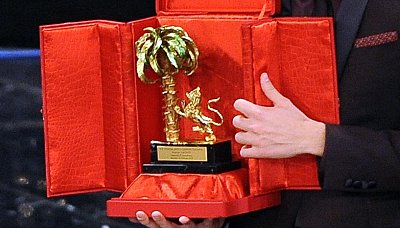
Sanremo Festival has just gone, but "What is Sanremo Festival?". That's the question!
What Is Sanremo? Inside Italy’s Most Important Music Festival
Every February, something extraordinary happens in Italy.
Restaurants turn their televisions on. Group chats explode. Newspapers dedicate front pages to song lyrics. Office productivity mysteriously drops. For five consecutive nights, millions of Italians gather around the same screen.
This is not the Super Bowl.
It is not the Grammys.
It is not just another European music competition.
It is the Festival di Sanremo — the most important Italian music festival and one of the longest-running song contests in the world.
If you’re searching for what Sanremo is or why Sanremo matters in Italy, here’s the answer: it’s not just a competition. It’s a national ritual.
When Did Sanremo Start? A Tradition Since 1951
The Italian song contest began in 1951 in the coastal city of Sanremo, later finding its iconic home at the Teatro Ariston.
What started as a modest post-war cultural event has grown into a global television phenomenon. Today, Sanremo Italy attracts millions of viewers each night and dominates Italian media for an entire week.
For over seventy years, it has survived political change, generational shifts, and revolutions in the music industry — from vinyl records to streaming platforms.
Yet every winter, it returns.
What Happens at the Festival di Sanremo?
At its core, Sanremo is an Italian song competition where artists perform original songs accompanied by a live orchestra. A winner is crowned at the end of five nights.
But that description barely scratches the surface.
Sanremo is:
A live television spectacle
A fashion event
A cultural debate
A political stage
A generational conversation
It is where Italy watches itself.
For rest of the world, imagine if:
The Super Bowl lasted five nights
The Grammys premiered brand-new songs instead of awarding old ones
The Oscars mixed live music, comedy, and social commentary
That’s the scale of Sanremo.
International Stars Who Have Appeared at Sanremo
Although deeply rooted in Italian culture, Sanremo has welcomed major global icons over the decades.
International guests have included Elton John, Madonna, David Bowie, Whitney Houston, Lady Gaga, and Bruce Springsteen.
Their performances turned the Italian music festival into an international event, watched far beyond Italy’s borders.
But even when global superstars take the stage, Sanremo’s emotional core remains unmistakably Italian.
Why Sanremo Is So Important in Italy
Sanremo has launched or elevated some of Italy’s biggest music careers. Artists like Andrea Bocelli and Laura Pausini gained major visibility through the festival.
In 2021, the rock band Måneskin won Sanremo before winning the Eurovision Song Contest — and eventually breaking into the U.S. market.
Sanremo songs often become:
Wedding soundtracks
Summer anthems
Generarion comparisons
Cultural milestones
For many Italians, memories are tied to specific winning songs and performances.
Sanremo is not just entertainment.
It is collective memory.
Why the World Should Pay Attention to Sanremo
In today’s fragmented media landscape, it’s rare for an entire country to watch the same event at the same time.
Sanremo still achieves that.
For one week, Italy pauses. Families gather. Social media debates explode. Radio stations replay performances the next morning. Even people who claim they “don’t care” end up talking about it.
If you want to understand modern Italian culture — its emotion, drama, elegance, humor, and love of debate — watching Sanremo is more revealing than reading any travel guide.
How to Watch Sanremo and Experience Italy Like an Insider
Curious to see what an Italian music festival feels like?
During festival week, performances and clips circulate widely online, and international viewers can follow highlights, recaps, and reactions across social media and streaming platforms.
Here’s your invitation:
Next February, don’t just read about Sanremo.
Watch it.
Experience five nights of live orchestra, unapologetic emotion, daring fashion, and passionate debate.
Because when the Festival di Sanremo begins, Italy doesn’t simply tune in.
Italy gathers.
And for one week, you can gather with it.