
Reserved Area Login
Why don't go out from crowded Venice, to enjoy a charming town? Come in Treviso
A little gem close to Venice
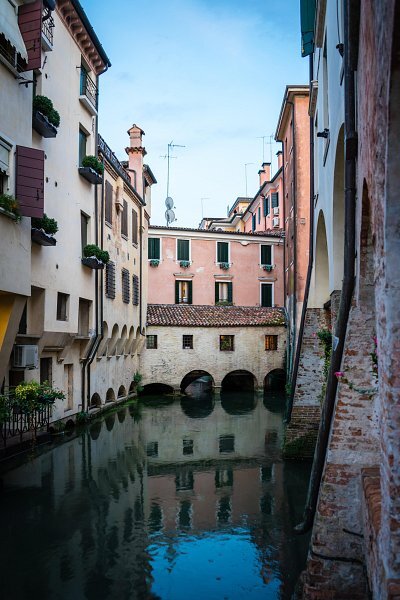
Treviso in Spring: The secret Italian city people didn't know they needed
You've booked Venice. You've seen the canals, watched the gondoliers, and maybe even survived the crowds at St. Mark's Square. But 30 minutes away by train sits a city most Americans walk right past — and in spring, it might just steal your heart completely.
Welcome to Treviso, the original "little Venice" that locals actually live in. March, April, and May transform this medieval city into something that feels almost cinematic: cherry blossoms frame the ancient walls, prosecco flows from the Veneto hills just beyond the city limits, and the morning light on the Sile River canals looks like a painting no filter could improve. Best of all? Almost no tour buses.
Explore our private Treviso tours — food, culture & prosecco day trips
Why Spring Is the Best Time to Visit Treviso
Unlike Venice, Treviso doesn't really have an "off-season problem." But spring is when the city truly wakes up. Here's what makes March through May so special:
- The cherry and wisteria blossoms along Viale Vittorio Emanuele and inside the old city walls are breathtaking in late March and April.
- Spring temperatures hover between 55–70°F, perfect for walking the medieval center without breaking a sweat.
- The radicchio season peaks in late winter and lingers into spring — you'll find it in every trattoria, from risotto to grilled starters.
- Prosecco country is just 20 minutes north, and the hills turn brilliant green — ideal for a combined food and wine day trip.
- Easter in Treviso is a genuine local celebration, with processions, market stalls, and colomba cake in every bakery window.
If your Italy trip falls between late February and early June, putting Treviso on your itinerary isn't just a nice idea — it's the kind of decision you'll brag about when you get home.
Getting to Treviso from Venice
This is easier than most Americans expect. You have three solid options:
By Train (Recommended)
The regional train from Venice Santa Lucia to Treviso Centrale runs roughly every 30 minutes and takes about 30 minutes. A one-way ticket costs around €3–4. It's reliable, scenic, and deposits you right in the heart of the city.
Private Transfer
For families, small groups, or travelers with luggage, a private transfer from Venice to Treviso is the most comfortable option. Your driver picks you up at your hotel and drops you exactly where you need to be — no navigating Italian rail apps required.
By Car
If you're renting a car and heading toward the Dolomites or Prosecco Hills afterward, driving gives you maximum flexibility. The A27 motorway links Venice and Treviso in under 30 minutes.
What to Do in Treviso in Spring: A Local's Itinerary
Here's how a well-paced day in Treviso actually looks — not the rushed tourist version, but the one where you actually feel the city.
Morning: The Fish Market and Canals
Start at the Piazza dei Signori, Treviso's elegant central square, for a proper Italian cappuccino. Then walk five minutes to the Pescheria — the famous fish market on a small island in the Botteniga canal. On weekday mornings, this is where Treviso feels most alive: fishmongers, local chefs, and retirees debating the quality of the catch. It's one of those scenes you can't stage.
Follow the canals south through the Calmaggiore — Treviso's main shopping street — then duck into the side streets. You'll find old laundry wheels still attached to canal walls, medieval frescoes on house facades, and cats sleeping on stone steps. This is the part of northern Italy that Rick Steves fans genuinely love.
Midday: Radicchio, Prosecco, and Tiramisu
Treviso's culinary identity is built on three things: radicchio rosso di Treviso (the long, bitter-sweet winter chicory), local prosecco from the nearby Conegliano Valdobbiadene hills, and — most importantly — tiramisu. This is where tiramisu was invented, and the city takes that legacy seriously.
For lunch, find a trattoria serving risotto al radicchio or bigoli in salsa (thick pasta with anchovies and onions). Pair it with a glass of local prosecco DOC — not the Champagne-style bottles you get at brunch back home, but something lighter, drier, and genuinely refreshing. A full lunch with wine at a local osteria typically runs €18–28 per person.
Afternoon: Medieval Walls and the Cathedral
Treviso's medieval city walls are among the best-preserved in the Veneto. Walking the perimeter in spring, with blossoms overhanging the old stones, takes about an hour and costs nothing. Inside the walls, the Cathedral of San Pietro (Duomo) contains an Annunciation by Titian that most visitors walk right past — it's one of the quietest, most beautiful Titian works in all of Italy.
Also worth a visit: the church of San Nicolò, with massive frescoed pillars and a chapter house filled with 14th-century portraits. It's free, uncrowded, and genuinely extraordinary.
Late Afternoon: Aperitivo Hour
Treviso invented the Aperol Spritz. Or at least, the Veneto did — and Treviso feels like ground zero. By 5 PM, the bars around Piazza dei Signori fill with locals doing exactly what you should be doing: sipping a spritz, snacking on cicchetti (small bites), and watching the city slow down. Order the spritz with Aperol or, if you want to go local, with Select — a Venetian bitter that's slightly more complex.
Book a private Treviso food & culture tour with a local expert
Book the Private Treviso Tour →
Day Trip Extension: Prosecco Hills in Spring
If you have a full day rather than a half-day, consider combining Treviso with a drive through the Conegliano Valdobbiadene Prosecco Superiore DOCG hills — a UNESCO World Heritage landscape since 2019. In spring, the terraced vineyards turn bright green against the blue sky of the pre-Alps, and the small family wineries along the hillside roads are open for tastings.
The 40-kilometer Strada del Prosecco connects Conegliano to Valdobbiadene through villages, family estates, and viewpoints that feel nothing like the wine regions Americans usually visit in Tuscany. It's quieter, less manicured, and completely authentic.
You can explore this area independently by car, or join one of our private Veneto food and wine experiences that combine Treviso with a prosecco winery visit in a single day.
Practical Tips for American Travelers
- Treviso is very walkable. The historic center fits inside a 20-minute walk end to end. Leave the suitcase at your Venice hotel.
- Most restaurants are closed between 3–7 PM. Plan lunch before 2 PM and dinner after 7:30 PM.
- Cash is still useful at markets and small bars. Most restaurants accept cards, but the fish market vendors usually prefer cash.
- Treviso airport (TSF) handles Ryanair flights from London, Brussels, and other European cities — worth knowing if you're flying into the region.
- English is spoken at most hotels and tourist-facing businesses, but learning "un caffè, per favore" and "quanto costa?" will get you warm smiles everywhere.
Treviso vs Venice: Are They Really That Different?
Yes. Dramatically. Venice is a museum city — extraordinary, unrepeatable, and in spring increasingly crowded. Treviso is a living Italian city where people go to work, shop for groceries, and raise families. The scale is human, the pace is slower, and the prices are noticeably lower.
That's not a criticism of Venice — it's one of the world's great travel destinations, and exploring it with a local guide completely changes the experience. But Treviso offers something Venice can no longer give you: the feeling of discovering a place before everyone else does.
If you're planning a Venice trip and want to see both, check out our private Venice orientation walk and the private Treviso tour — many of our American guests do both in a single two-day window.
Ready to Discover Treviso This Spring?
Treviso rewards the curious traveler — the one who looks past the famous postcard and asks "what's just around the corner?" In spring, with blossoms on the old walls and prosecco in the hills, that corner looks particularly beautiful.
Tour Leader Italy has been guiding American travelers through the Veneto since 1997. Igor Scomparin, our founder and licensed guide featured by National Geographic, Rick Steves, and Condé Nast Traveler, knows every canal, every trattoria, and every shortcut in this corner of Italy. Contact us to start planning your Treviso experience.
All Treviso experiences — private tours, food walks & prosecco day trips
Frequently Asked Questions about Treviso in Spring
Is Treviso worth visiting as a day trip from Venice?
Absolutely — and for many American travelers, it turns out to be the highlight of their entire Italy trip. Treviso is only 30 minutes by train from Venice Santa Lucia and costs around €3–4 each way. Unlike Venice, which sees millions of tourists per year, Treviso remains a genuinely local Italian city: medieval canals, a famous fish market, Titian paintings in uncrowded churches, and the best aperitivo scene in the Veneto. If you have a free day during your Venice stay, Treviso is the single best place to spend it. A private guided tour can help you get the most out of a half-day or full-day visit.
What is Treviso famous for in terms of food and drink?
Treviso has a remarkably rich culinary identity for a small city. It's the birthplace of tiramisu — you'll find the original recipe at a handful of local restaurants who still debate its exact origin. The city is also the home of radicchio rosso di Treviso IGP, the distinctive bitter-sweet red chicory that appears in risotto, pasta, and grilled dishes throughout the winter and spring. The surrounding hills produce some of Italy's finest prosecco — specifically the Conegliano Valdobbiadene DOCG, a UNESCO-protected wine region just 20 minutes north. And of course, Treviso is widely credited as the birthplace of the Aperol Spritz. Our Treviso food and wine tours cover all of these highlights with a local expert.
When is the best time of year to visit Treviso?
Spring — specifically late March through May — is widely considered the best time to visit Treviso. Temperatures are mild (55–70°F), the medieval walls are covered in cherry and wisteria blossoms, radicchio is still on the menu, and the prosecco hills to the north are at their most scenic. Early autumn (September–October) is another excellent window, when the grape harvest brings the Strada del Prosecco to life. Summer can be warm and occasionally humid in the Veneto plain, while winter is cool and quiet — though the Christmas markets in Piazza dei Signori are genuinely charming. Whenever you go, Treviso sees far fewer tourists than Venice year-round, which is itself a very good reason to visit.